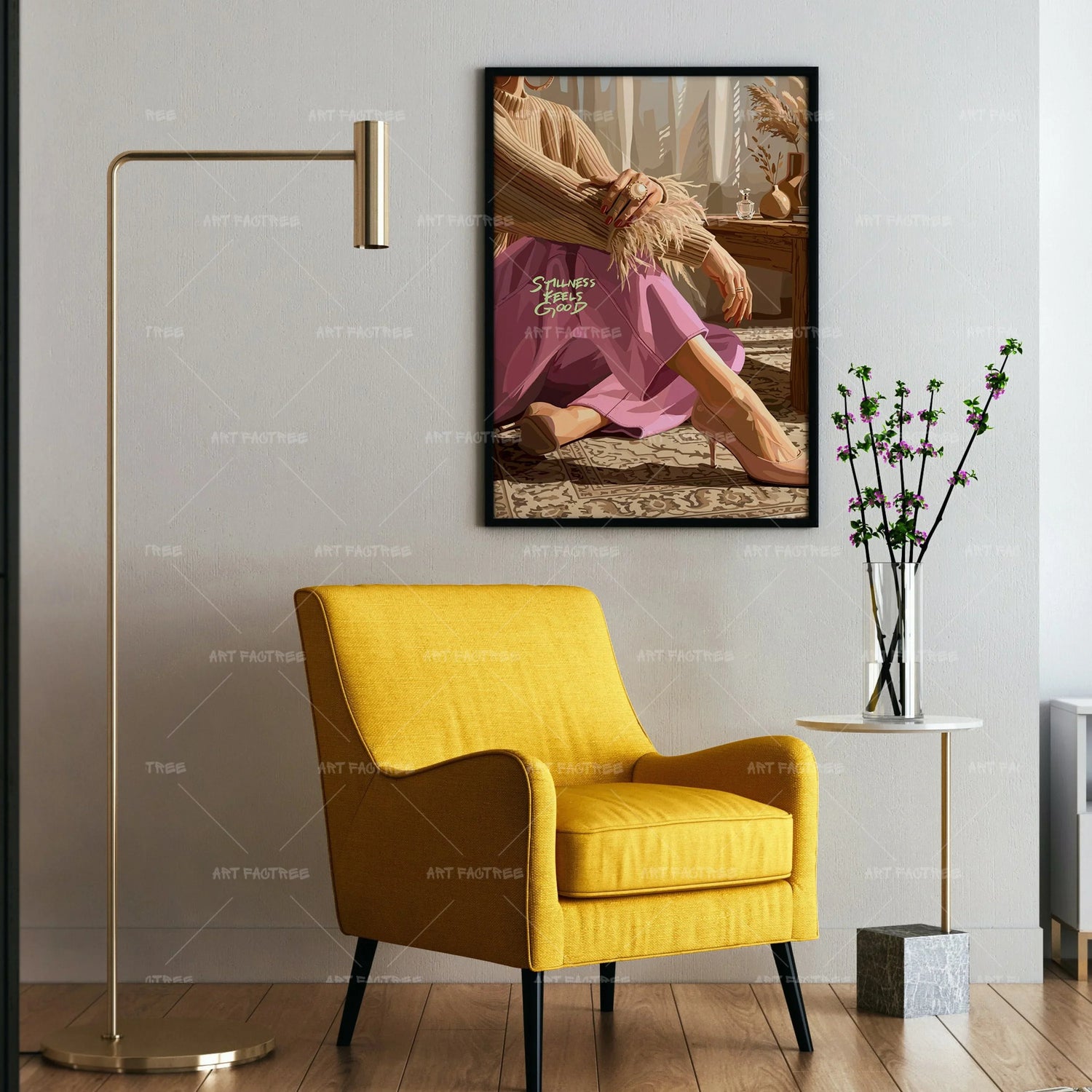
Minimalism in interior design is not about emptiness. It is about clarity, balance, and intention. Minimalist wall art follows the same philosophy. Instead of overwhelming the space, it supports it quietly, allowing every element in the room to breathe.
In a world where visual noise is constant, minimalist wall art offers something different. It creates calm.
Minimalist wall art is defined by simplicity. It often uses limited color palettes, subtle contrasts, and clean compositions. There is usually a strong focus on negative space, which allows the eye to rest and absorb the piece without distraction.
This style works especially well in bedrooms and home offices, where calmness and focus are important. In these spaces, overly complex artwork can feel mentally cluttering. Minimalist pieces, on the other hand, create a sense of ease.
One of the strengths of minimalist wall art is its versatility. Because it avoids heavy detail, it can adapt to different design styles. It works just as well in modern interiors as it does in Scandinavian or transitional spaces. This flexibility makes it a long-term choice rather than something tied to a specific trend.
Minimalist art also pairs well with neutral color palettes. Soft whites, beige tones, light grays, and muted earth colors create a cohesive look when combined with simple artwork. The result is a space that feels polished without trying too hard.

Another important aspect of minimalist wall art is proportion. Because the design is simple, size becomes more noticeable. A well-sized minimalist piece can feel very intentional, while a poorly sized one can look incomplete. This is why scale matters even more in minimalist spaces.
Minimalist wall art also works beautifully when combined with texture. Even if the design itself is simple, a canvas with subtle texture or depth can add richness to the room without breaking the minimalist aesthetic.
Choosing minimalist wall art is not about having less for the sake of it. It is about choosing carefully. Each piece should feel like it belongs, not like it was added to fill space.
Minimalism allows the room itself to become part of the design. The walls, the light, and the surrounding elements all contribute to the overall effect. Wall art simply enhances that balance.
When done well, minimalist wall art does not feel empty. It feels intentional.


Leave a comment
This site is protected by hCaptcha and the hCaptcha Privacy Policy and Terms of Service apply.