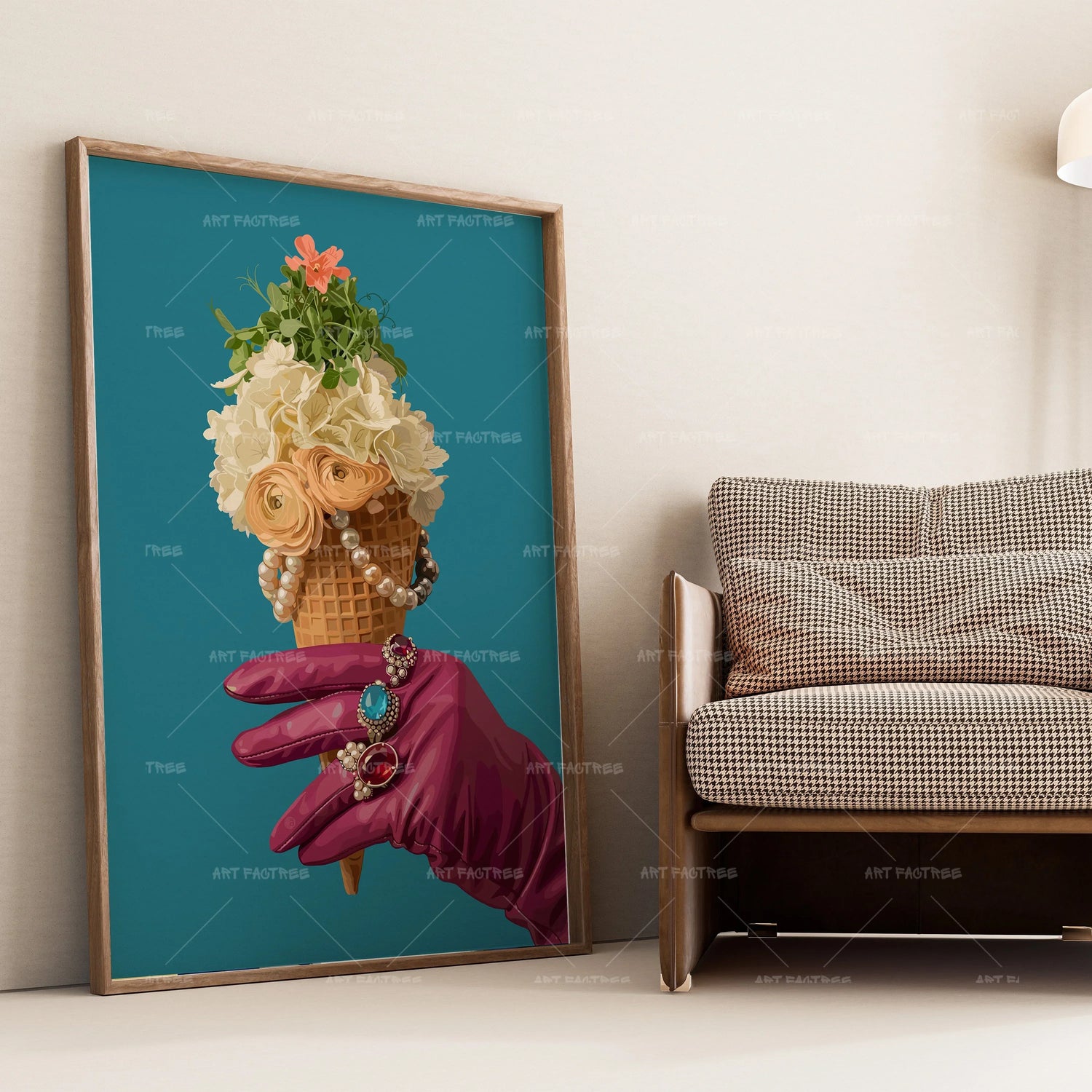
Decorating a small space comes with unique challenges. Every choice feels more noticeable, and even small design decisions can either open up the room or make it feel more confined. Wall art is often overlooked in smaller spaces, but when used correctly, it can actually make a room feel larger, more balanced, and more intentional.
The key is not to avoid wall art, but to use it strategically.
One of the most effective approaches in small spaces is choosing a single well-sized piece instead of multiple small ones. While it may seem safer to go small, tiny artwork on a medium wall often looks disconnected and makes the wall feel emptier. A properly scaled piece creates focus and gives the room a sense of structure.
Vertical wall art is another powerful tool in compact spaces. Tall, narrow pieces draw the eye upward, creating the illusion of higher ceilings. This works particularly well in apartments or rooms where floor space is limited but wall height can still be emphasized.
Color also plays a major role. Lighter tones tend to reflect more light, making the room feel more open. Wall art that incorporates soft neutrals, pastels, or airy compositions can visually expand a space rather than close it in. Dark or overly heavy pieces can still work, but they should be used more selectively and placed where they won’t dominate the room.

Minimalist wall art is especially effective in small spaces. Clean lines and open compositions prevent visual clutter, allowing the room to feel calm and breathable. When wall art becomes too detailed or busy, it can make the space feel crowded.
Another important consideration is placement. In smaller rooms, wall art should feel connected to furniture rather than floating randomly. Placing artwork just above a sofa, bed, or desk helps anchor the layout and creates a sense of cohesion.
Mirrored or reflective art styles can also help small spaces feel larger. While not traditional wall art, pieces that incorporate shine or reflective surfaces can bounce light around the room and create depth.
Custom wall art can be particularly useful in small spaces because it allows you to tailor size and composition precisely. Instead of trying to make a generic piece fit, you can create something that aligns perfectly with the room’s proportions.
Small spaces benefit most from intention. Every element matters more, and wall art should be chosen with that awareness. When scale, color, and placement are aligned, even the smallest room can feel thoughtfully designed.


Leave a comment
This site is protected by hCaptcha and the hCaptcha Privacy Policy and Terms of Service apply.